01 · RELINQUISHED PROPERTY
Pinnacle Pass
Scotts Valley · 75 Mt. Hermon Road
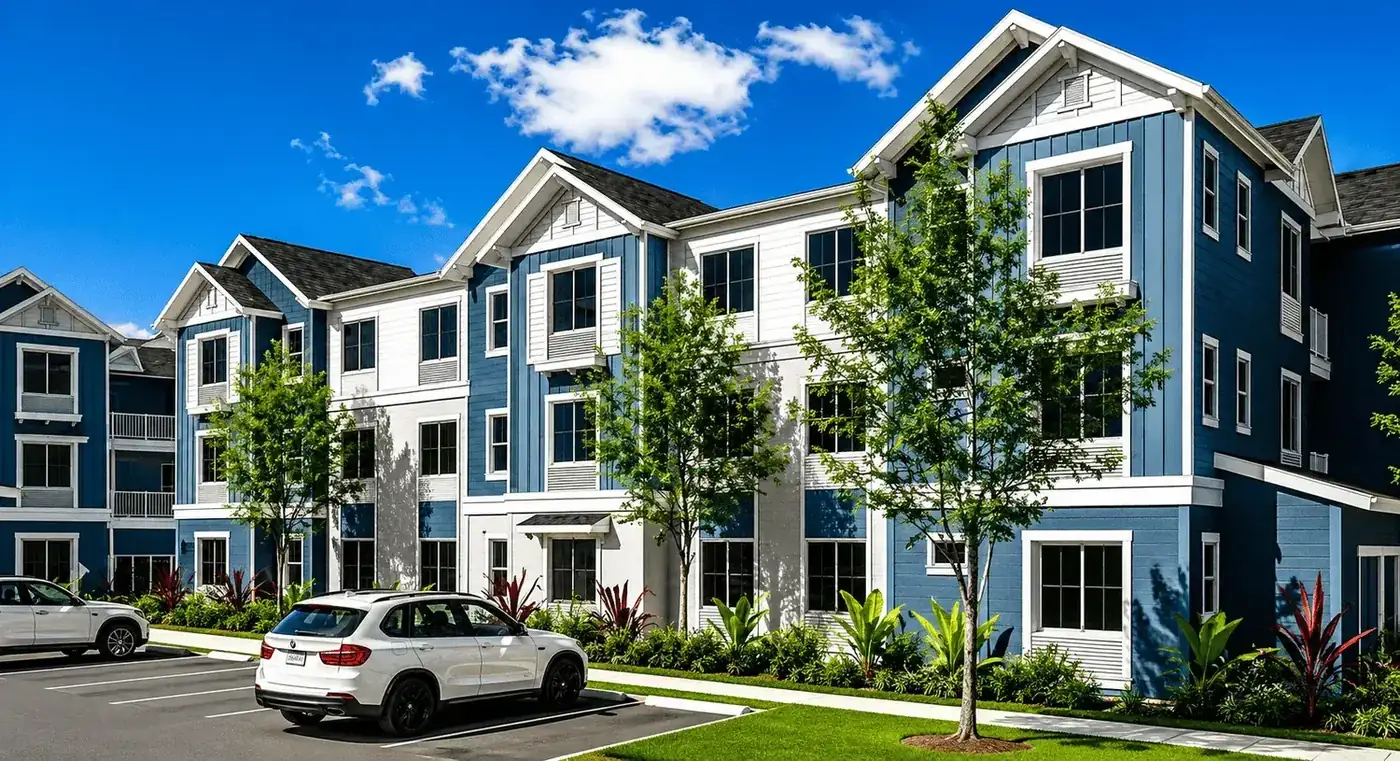
Acquired by CRP for $4.55 million. A 100% affordable, 40-unit development under construction.
REAL ESTATE COLLECTIVE GROUP
FROM OWNERSHIP TO LEASEHOLD
A $4.55 million Scotts Valley sale followed by a $1.2 million exchange connecting two CRP affordable housing developments.
01 · RELINQUISHED PROPERTY
Scotts Valley · 75 Mt. Hermon Road
Acquired by CRP for $4.55 million. A 100% affordable, 40-unit development under construction.
02 · REPLACEMENT PROPERTY
Santa Cruz · 407 Pacific Avenue

Acquired by CRP for $4.5 million. The exchanger placed $1.2 million into a leasehold interest tied to this planned 102-unit, 100% affordable community.
THE EXCHANGE
Following the sale, the exchanger sought tax deferral with less operational involvement. The structure assigned a 28% leasehold interest under a 35-year master lease, then subleased that interest to an affiliated operating entity for $10,000 per month.
HOW IT FITS TOGETHER
A 35-year lease covering an undivided 28% interest in the property and improvements.
The original master tenant assigns the leasehold interest to the exchanger for $1.2 million.
The owner recognizes the exchanger as the successor tenant under the master lease.
The operating entity pays $120,000 annually in monthly installments.
A CLOSER LOOK
| Participant | Role | Cash flow & obligations |
|---|---|---|
| Property owner | Fee owner and master landlord | Receives the $1.2M lease prepayment through the transaction structure. |
| Exchanger | Assignment and master tenant | Holds the long-term leasehold interest and receives sublease rent. |
| Operating affiliate | Subtenant and property operator | Pays $10,000 monthly and assumes extensive operating obligations. |
The 35-year term was designed to give the exchanger a long-duration interest in real property rather than a short-term operating contract. The exchanger’s tax and legal advisors must determine whether the final leasehold, identification, closing, and ownership structure satisfy Section 1031 and all other applicable requirements.
The master lease is drafted as an absolute-net arrangement. Taxes, utilities, insurance, maintenance, repairs, compliance, and other property-level costs are generally allocated to the tenant side of the structure. The sublease then passes extensive possession, operating, maintenance, and insurance responsibilities to the operating affiliate, subject to the exact language of the final documents.
$7,666.28 per month, reduced to $0 if the $1.2 million prepayment is made within 30 days of commencement.
$120,000 per year, stated as $10,000 monthly installments.
The operating subtenant is responsible for impositions, utilities, insurance, and other incorporated prime-lease obligations, subject to the final documents.
Fixed rent is due monthly in advance without setoff, counterclaim, or deduction, subject to applicable law and the agreement terms.
If the owner sells the underlying property to an unrelated buyer and elects to cancel the master lease, the documents require at least 60 days’ notice and payment of a cancellation fee. That fee has two components:
A declining present-value schedule, from $1.2 million in Lease Year 1 to approximately $85,977 in Lease Year 35.
An additional amount intended to cause the exchanger’s original $1.2 million payment, scheduled cancellation amount, and sublease payments to produce a 10% internal rate of return.
What the Exit Formula Does
The formula is intended to preserve the agreed economics if the lease ends early because of a qualifying property sale. Actual payment still depends on the owner’s performance, enforceability of the documents, the final calculation, and the facts at the time of sale.
No Appreciation Assumption Required
The base case is driven by contractual sublease payments rather than a projection that the exchanger must sell the leasehold interest at a higher value. Any residual value, transfer opportunity, or tax treatment at exit should be separately evaluated.
PASSIVE ORIENTATION
Operating responsibilities are intended to sit with the affiliated subtenant rather than the exchanger.
LONG DURATION
The master lease runs for 35 years, providing a long-term contractual framework.
DEFINED INCOME
The sublease states fixed rent of $10,000 per month.
AFFORDABLE HOUSING LINKAGE
The leasehold interest is tied to 407 Pacific Avenue, planned as a 100% affordable, 102-unit housing community.
SALE FRAMEWORK
The master lease contains notice and cancellation-payment provisions if the owner sells and terminates.
INTEGRATED STRUCTURE
The master lease, assignment, amendment, sublease, and landlord consent are designed to operate together
Tax Qualification: Confirm that the leasehold term, acquisition, identification, closing, entity structure, qualified intermediary process, and relinquished-property facts satisfy Section 1031.
Counterparty credit: Evaluate the owner, master-tenant assignor, operating subtenant, guaranties if any, capitalization, and ability to perform over the full term.
Final documentation: Confirm the property, percentage interest, rent terms, governing law, insurance requirements, dates, exhibits, party names, and landlord consent in the completed agreement set.
Property diligence: Review title, environmental conditions, zoning, physical condition, casualty exposure, condemnation rights, existing debt, leasehold-mortgage rights, and the underlying development or operating plan.
Exit mechanics: Independently verify the cancellation-fee schedule, 10% IRR calculation, remedies, security, and treatment of any transfer, sale, default, or early termination.
Development Study Takeaway
This structure illustrates how a 1031 exchanger can move from direct property ownership into a long-term leasehold position supported by a sublease and defined exit economics. Suitability depends on the exchanger’s objectives, the property, counterparty strength, finalized documents, and independent tax and legal advice
DISCUSSION PURPOSES ONLY
This Development Study summarizes selected provisions from transaction-form documents and is not an offer, tax opinion, legal opinion, appraisal, guarantee, or projection. Section 1031 treatment is fact-specific. Prospective exchangers should rely on their own qualified intermediary, CPA, tax counsel, legal counsel, and exchange advisors. All economics remain subject to final documentation and counterparty performance.
TAKE A CLOSER LOOK
STAY INFORMED
Receive educational materials, strategy updates, and invitations to future webinars.
Sign up for updatesSign up on our main website.